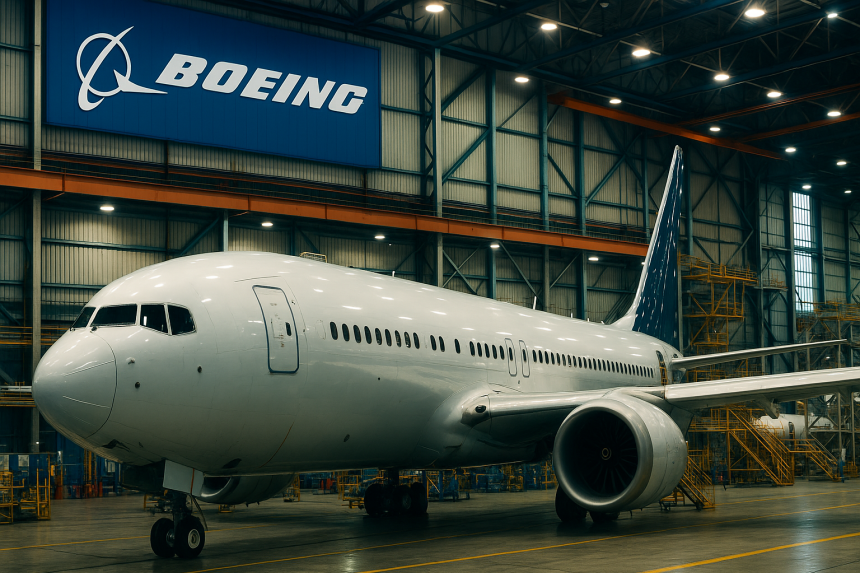
Boeing is on the cusp of securing a significant aircraft deal with China, coinciding with President Donald Trump’s diplomatic visit to the country. The potential agreement surfaced amid various strategic discussions aimed at enhancing U.S.-China economic ties. This development represents a concerted effort from American businesses to capitalize on evolving international relationships, with Boeing standing at the forefront. The anticipated deal aligns with broader talks encompassing trade negotiations and technological exchanges between the two global powers.

Previously, Boeing’s interactions with China were complex due to fluctuating political dynamics and trade issues impacting bilateral relations. Past collaborations also highlighted China’s substantial demand for aircraft driven by its expanding aviation sector. This potential agreement could mark a notable shift in the aerospace landscape, facilitating deeper ties rooted in mutual economic interests. Unlike previous negotiations, current advancements are set against a background of broader geopolitical engagements that could redefine trade partnerships.
What Does This Mean for Boeing?
Boeing CEO Kelly Ortberg tied the prospective deal’s realization to successful U.S.-China negotiations. He noted the potential order, significantly impacting the company’s operations and market presence. Ortberg expressed optimism, stating,

“I’m not going to give you the number of airplanes, but it’s a big number.”
The anticipated order could involve a mix of Boeing’s 737 Max aircraft, highlighted as a focal point during collaborative talks.
How Might Broader U.S.-China Relations Influence the Deal?
Mutual interests in expansive trade agreements could indeed smoothen paths for the Boeing deal. There’s an overarching context involving energy and technological exchanges, which are critical to both nations’ economic aspirations. Ortberg highlighted the supportive role of the U.S. administration, asserting,
“President Trump has been very focused on supporting us in international campaigns, and he’s been very successful in doing that.”
Such political backing could certainly play a crucial role in fast-tracking negotiations.
China’s interest in acquiring approximately 500 Boeing 737 Max jetliners emerges as pivotal, considering the country’s robust aviation industry’s needs. While ongoing negotiations may also cover widebody jetliners like the 787 Dreamliner, initial focus remains on the 737 Max. However, subsequent agreements involving wider aircraft models are projected, contingent on evolving diplomatic engagements.
The summit, which included other industry leaders from companies such as Tesla (NASDAQ:TSLA) and Apple (NASDAQ:AAPL), underscores America’s strategic push for diversified collaboration ranging from aviation to artificial intelligence. Additionally, discussions from the U.S. side could influence China’s regulatory policies, enhancing the overall bilateral trade framework. Trump’s engagement showcases a multifaceted approach devised to strengthen America’s economic foothold in China.
Boeing’s position in the Chinese market is underscored by previous deals, albeit under different political climates. The landscape now may offer new opportunities for deeper economic integration. Achieving substantial agreement results could depend on steady negotiation management between the U.S. and Chinese administrations, setting a precedent for future aviation agreements.
The culmination of this aircraft deal may forecast the trajectory of U.S.-China economic relations. Significant shifts in political and economic strategies seem crucial, turning aviation deals into policy vehicles promoting broader economic objectives. Approaching such agreements with a strategic lens promises enduring impacts on both aviation industries and wider geopolitical environments.