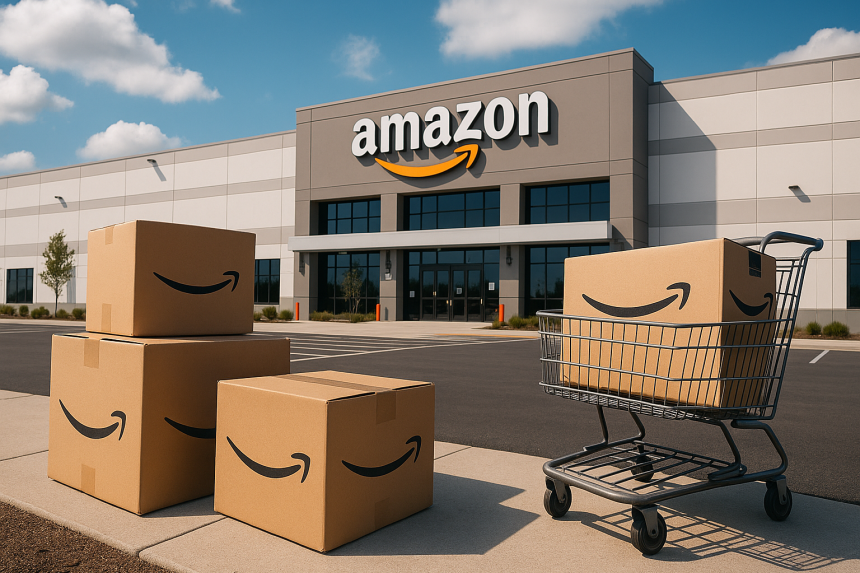
In a bold move, Amazon (NASDAQ:AMZN) is now making its comprehensive supply chain tools available to businesses globally, regardless of their size. This new initiative marks a significant expansion from its traditional retail-centric operations, opening the floodgates for various sectors to capitalize on Amazon’s sophisticated logistics infrastructure. The roll-out of Amazon Supply Chain Services (ASCS) aims to democratize access to the same systems that power the retail giant’s own operations. The program is set to transform the logistics landscape and drive increased efficiency across industries.

 ETH
ETH
 SOL
SOL
 BSC
BSC
 ROBINHOOD
 USDT
USDT
 AAPL
AAPL
In previous years, Amazon primarily operated its supply chain to serve its vast online retail and marketplace operations. This new service broadens that scope, offering tools like parcel shipping, fulfillment, and freight transportation to an extensive list of businesses. By doing so, Amazon positions itself as a major logistics provider, comparable to established industry players. The company had already shown interest in expanding its logistics footprint, but the current service marks a notable diversification in its offerings.
How Does ASCS Compare to Amazon Web Services?
The parallel drawn between Amazon Supply Chain Services and Amazon Web Services (AWS) illustrates the strategic importance of ASCS in Amazon’s broader business ecosystem. AWS redefined cloud computing by enabling businesses access to scalable IT resources; similarly, ASCS is set to standardize efficient logistics for businesses. Peter Larsen, vice president of ASCS, emphasized, “Supply chain wasn’t just a function at Amazon—it was core to providing an exceptional shopping experience.”

Can SMBs Compete with Amazon on Delivery Speed?
While some small and medium-sized businesses (SMBs) grapple with meeting the delivery speeds set by industry giants, further insights indicate that faster delivery does not always equal better service. It’s about finding a balance that meets specific consumer needs. Highlighting this, Andrew McLean from Lands’ End remarked,
“Amazon is one of our key ecommerce partners, and we’re excited to leverage Amazon Supply Chain Services.”
For SMBs, aligning service models with their unique customer bases could prove more beneficial than attempting to match Amazon’s delivery performance directly.
Partners like 3M, Procter & Gamble, and American Eagle Outfitters aim to optimize their logistics with these new tools. They see potential in positioning inventory closer to consumers, which could significantly enhance customer satisfaction. This collaboration reflects the broader potential of ASCS to reshape logistical efficiency and inventory management across industries.
Amazon’s decision to lend its logistics capabilities to others comes shortly after its expansion of Amazon Connect into specialized AI solutions for logistics and HR. This indicates a strategic emphasis on smart logistics, reinforced by AI-driven decision-making that can tailor supply chain solutions.
In recent analyses, experts argue that while Amazon and competitors like Walmart (NYSE:WMT) push towards speed, maintaining profit margins requires balancing rapid delivery with other consumer demands such as competitive pricing and reliable inventory data. As Dinesh Gauri noted, “Although quick fulfillment is important, Amazon and Walmart are ‘killing their margins’ by focusing on it too much.”
The introduction of ASCS offers a chance for businesses worldwide to harness logistics solutions previously exclusive to Amazon. However, companies must consider their unique delivery needs and customer expectations. Fast delivery is valuable, but not at the cost of increased complexity and reduced profitability. Understanding consumer priorities ultimately helps tailor business strategies effectively.