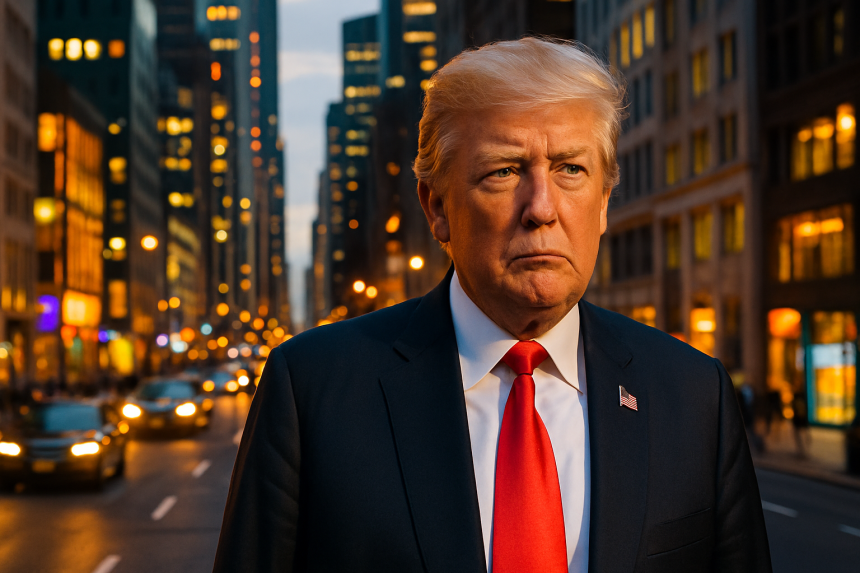
In the ever-evolving landscape of digital finance, former President Donald Trump recently addressed the banking sector, urging a swift movement on cryptocurrency legislation. Speaking at an exclusive event in Mar-a-Lago, Florida, Trump emphasized the importance of passing the Digital Asset Market Clarity Act, suggesting that bankers should not impede progress. This gathering brought together notable figures like Tether CEO Paolo Ardoino and former boxer Mike Tyson, highlighting the bill’s widespread interest across varied sectors. Trump’s support for the legislation stems from a belief in its potential to provide clear regulatory guidelines in the U.S. financial sector.

 ETH
ETH
 SOL
SOL
 BSC
BSC
 ROBINHOOD
 USDT
USDT
 AAPL
AAPL
Why Is Trump Pushing for the Digital Asset Market Clarity Act?
The Digital Asset Market Clarity Act aims to create a solid framework for digital assets and decentralized exchanges. Crucially, it would distinguish between digital commodities and securities, thereby offering clarity to exchanges and banks. The White House has maintained that banning stablecoin yield rewards wouldn’t significantly affect lending, a standpoint that differs from concerns voiced by several banking groups. Trump underscored his commitment to fostering financial innovation while ensuring the stability of the monetary system.
“The White House won’t allow banks to stall this legislation,” Trump declared, asserting its necessity for economic growth.
How Have Banking Groups Reacted to Trump’s Advocacy?
Banking groups have expressed apprehension, fearing new regulations on stablecoin rewards may trigger deposit flights. This fear has contributed to delays in the legislative process, as traditional financial institutions advocate for frameworks that minimize risks. Concerns spotlight critical challenges in aligning old banking models with emerging digital finance innovations. However, these voices contrast with Trump’s vision, as he emphasizes the bill’s potential impact on the U.S.’s competitive stance in global digital finance.

Over time, the debate over stablecoin regulations has involved various stakeholders, including lawmakers and industry leaders. Last year, the Independent Community Bankers of America warned that stablecoin rewards could cause significant financial losses for community banks. Nonetheless, the conversation has steadily shifted towards finding a balanced regulatory approach. This ongoing discourse highlights the clash between innovation and traditional banking concerns.
A recent letter from over 100 crypto companies to the Senate Banking Committee exemplifies growing industry support for the CLARITY Act. They argue that establishing durable U.S. rules is crucial for advancing financial infrastructure such as tokenized assets. Trump’s insistence on advancing the legislation found support from the crypto community, which saw it as a cornerstone for long-term growth.
Despite differing opinions, the act passed the House of Representatives in 2025, indicating some legislative backing. The ongoing delay in the Senate reflects the need for more discussions among lawmakers and financial experts to resolve disagreements regarding stablecoin interest payments. Trump’s recent reiteration indicates that the act remains a legislative priority for him.
Deciphering Trump’s proactive stance on the crypto landscape calls for a nuanced understanding of both its potential and its challenges. Efforts to establish comprehensive regulations reflect the U.S.’s broader shift from a passive to an active regulatory approach.
Trump stated, “This act is a priority, ensuring the U.S. remains at the forefront of financial innovation.”
The debate continues to evolve, necessitating an informed and balanced legislative outcome.