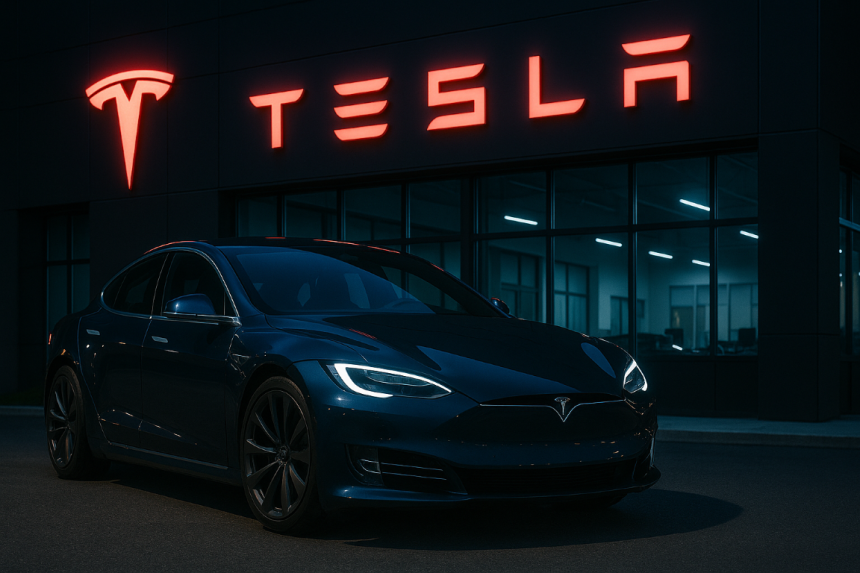
Amid fluctuating market trends, Tesla (NASDAQ:TSLA) is observing a downturn in stock performance. Despite a prior upswing, Tesla’s share value faces hurdles as delivery figures fall short of expectations, and regulatory challenges persist in the autonomous vehicle space. Investors keenly watch these developments, drawing interest from both critics hesitant about Tesla’s trajectory and stakeholders optimistic about future innovations.

Tesla’s delivery forecasts have often reflected broader market sentiments. In previous quarters, projections have consistently adjusted alignment with perceived demand fluctuations. Historically, the company has faced recurring skepticism about sustaining growth amidst its ambitious operational objectives. Such patterns inform the present narrative, where delivery projections for Q1 2026 are markedly cautious compared to earlier bullish expectations.
What Is Impacting Tesla’s Deliveries?
Projections for Tesla’s Q1 2026 deliveries have been revised, with RBC Capital forecasting 367,000 units. This anticipation falls short of Visible Alpha’s consensus of 370,000 units. Historically, Tesla’s first full-year decline in deliveries over 2025, by 9%, emphasized emerging reservations among investors. This hesitancy is exacerbated by prior quarter results showing significant year-over-year downturns in both unit deliveries and automotive revenue.

Why Are Regulatory Decisions Influencing the Market?
In addition to delivery numbers, regulatory outcomes also weigh on Tesla’s market perception. California’s classification of Tesla’s vehicle technology as SAE Level 2 necessitates a re-analysis of their robotaxi endeavor. This regulatory stance signifies the need for a safety driver, contradicting Tesla’s fully autonomous vehicle claims and straining investor confidence. Tesla stated,
“Our technology continues to evolve toward greater autonomy.”
Despite these challenges, the allure of potential positive catalysts remains strong. Speculation regarding a SpaceX IPO at a valuation as high as $1.75 trillion draws considerable attention. Some investors view the IPO as a significant driver for Musk-affiliated enterprises, potentially leading to notable stock responses. Down the line, Tesla’s Cybercab production slated for commencement in the first half of 2026, beckons promise to invigorate interest.
The discussion surrounding Tesla’s trajectory is marked by contrasting elements of anticipation and caution. Analysts maintain that uncertain market conditions may trigger rapid stock valuation changes. Morningstar highlighted,
“Reactions linked to significant announcements by Musk can result in swift market movements.”
On-going developments in autonomous vehicle initiatives, such as collaborations for insurance purposes with Lemonade, provide glimpses of Tesla’s expanding ecosystem endeavors.
Future prospects rest on forthcoming delivery data set for March’s end, which could further shape Tesla’s immediate market positioning. Given the projection of a probable decline in deliveries, scrutiny remains high as stakeholders ponder Tesla’s adaptability to market demands and regulatory landscapes. Musk’s associated ventures continue to reflect his broader market influence, providing context for how Tesla stock fluctuates with industry-driven volatility.