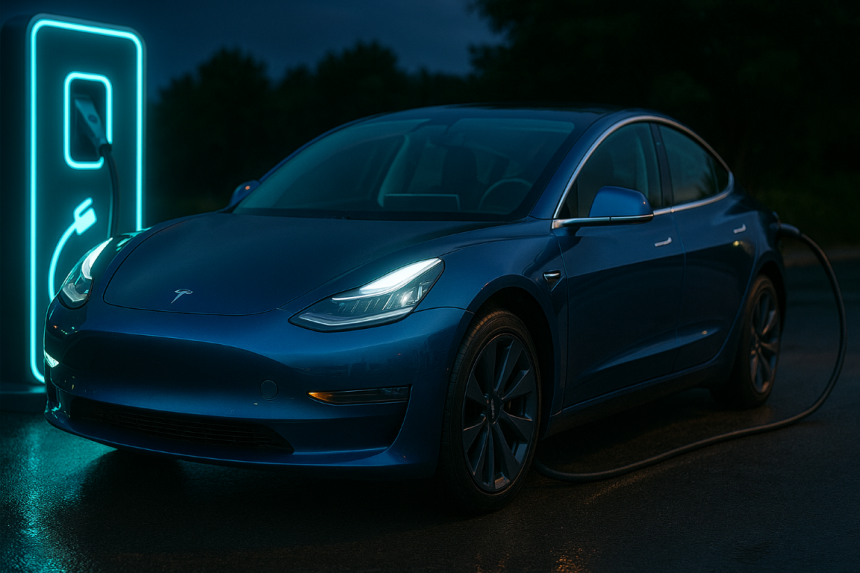
Tesla (NASDAQ:TSLA)’s long-standing dominance in the electric vehicle (EV) market faces intense competition from Chinese automakers and emerging brands, signaling a shift in the industry. With the EV market growing by 26% to 20.5 million units in 2025, Tesla’s deliveries saw a decline of 9%, dropping to 1.64 million vehicles. This comes as a surprise to the industry, which once saw Tesla as a leader and innovator. The changing landscape reveals how new players are entering the market with diverse offerings and competitive pricing, challenging Tesla’s position by delivering new models at faster rates.

Tesla previously enjoyed unrivaled success in the EV landscape, with its technology and brand standing out in the market. However, its current stagnation is caused by reliance on older designs like the Model 3 and Model Y, which were successful in recent years. Now, newer brands such as BYD, Lucid, Geely, Xiaomi, and XPeng are capitalizing on this opportunity. These firms are leveraging vertical integration, advanced autonomous technology, and strategic pricing to attract consumers seeking more than what the established Tesla models offer. This competitive environment has resulted in a fragmented market where Tesla no longer holds the clear advantage.
Who are the Key Challengers?
In 2025, BYD emerged as a formidable competitor, overtaking Tesla with sales of 2.26 million pure electric vehicles, marking a 28% increase from the previous year. BYD’s success highlights its distinctive approach to vertical integration, with the company manufacturing its own batteries and components, providing a cost advantage. Meanwhile, Lucid Group is positioning itself in the luxury segment, expanding its lineup and posing a threat to Tesla’s premium offerings. Geely’s diversified portfolio has also gained significant market share, surpassing Volkswagen as China’s second-largest automaker, showcasing the shifting dynamics in the EV space.

Can Tesla Reclaim Its Dominance?
Tesla faces mounting challenges as other automakers match its technological advancements at competitive prices. Xiaomi’s expansion beyond smartphones into the EV market exemplifies how tech-based integration and innovation can challenge traditional automotive approaches. As Xiaomi plans to scale its production and global reach, Tesla must focus on leveraging its brand and innovation to maintain a competitive edge. Meanwhile, XPeng’s advances in autonomous driving systems demonstrate that former technological advantages held by Tesla may now belong to competitors.
Having paved the way for autonomous driving, XPeng is now rolling out its new VLA smart driving system, putting itself on par with Tesla’s Full Self-Driving technology. Volkswagen’s recent deal with XPeng further cements the latter’s strong position. As the industry evolves, the competitive pressure is causing Tesla to adjust its strategies to avoid losing further market share.
Tesla remarked on the situation, stating: “As the EV ecosystem evolves rapidly, maintaining our technological lead requires agility and strategic innovation.” Meanwhile, Lucid has expressed confidence in their position, with statements like, “Our expanded product lineup is tailored to capture greater market share in the premium EV segment.”
The current landscape of the EV market suggests significant opportunities for new players and challenges for established ones like Tesla. Consumer preferences are shifting towards diversified product offerings and competitive pricing, qualities that the current emerging brands fulfill. As Tesla’s dominance is challenged, the company must innovate to retain its standing. The rapid advancements and strategic positioning by companies such as BYD, Lucid, and XPeng illustrate the dynamic nature of the EV industry. Looking forward, it will be telling to see if Tesla adapts to the redefined market conditions.