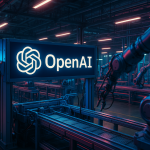
The demand for advanced technology solutions in manufacturing has given rise to Arda, co-founded by Bob McGrew, a former chief research officer at OpenAI. The startup is attempting to bridge the gap between AI and the physical world, seeking a significant investment that would peg their valuation at $700 million. Arda aims to automate several aspects of production, a move that could redefine operational efficiencies in the industry. While many companies strive to merge artificial intelligence with human activities, the effectiveness of such integrations often hinges on comprehensive system harmonization.

Previously, similar AI manufacturing initiatives have shown incremental improvements rather than radical shifts. While AI-based maintenance models and inspection tools add value, they often maintain existing process frameworks, resulting in friction between AI aspirations and on-ground workflows. McGrew’s endeavor appears as part of a broader trend of former OpenAI executives venturing into AI startup ecosystems, along with figures like Ilya Sutskever and Mira Murati launching projects with diverse focuses.
What is Arda’s Vision?
Arda’s vision encompasses developing an AI and software platform capable of analyzing factory footage to train robots for autonomous operations. The software aims to synchronize machines and human elements from product conceptualization to completion. Highlighting this strategic approach, McGrew previously engaged in training robots for physical tasks during his time at OpenAI. The linkage of AI with practical, physical tasks reflects an effort to address persistent operational challenges in manufacturing.

How Does McGrew’s Initiative Connect with Broader Trends?
The rise of AI-centric startups from former OpenAI executives highlights a shared pursuit of AI integration in various sectors. Mira Murati’s company, Thinking Machines, alongside Ilya Sutskever’s Safe Superintelligence, points to a significant drive within this community toward exploring new AI dimensions. Together, these endeavors indicate a cohesive narrative of AI evolving to undertake more complex processes.
In line with ongoing academic evaluations, manufacturing environments present unique challenges. Earlier AI deployments often remained bound to the supportive role, providing predictive repairs or demand forecasts without reshaping essential processes. Reports by institutions such as the MIT reveal that real productivity gains become achievable when innovations drive organizational redesign and worker reskilling efforts.
McGrew stated,
“Arda aspires to articulate the intersection of machine intelligence and traditional manufacturing processes.”
Acknowledging these hurdles is crucial for driving progress within the industry. Aligned with expert insights, productivity enhancements emerge when companies methodically integrate AI within existing systems without disruptions.
Reflecting on these dynamic conditions, industries embracing AI need to rethink operational paradigms. Linking data and moving decision-making closer to data-integration points is vital for future enhancements. Arda’s potential success in getting $70 million funding underscores the pursuit of novel AI approaches.
Arda’s platform development remains in sync with broader AI demands, anticipating vital shifts in how manufacturing might function in the future. As manufacturing environments evolve, embedding AI into pre-existing workflows stands poised to enhance productivity levels, ultimately transforming task allocations and operational synergies.