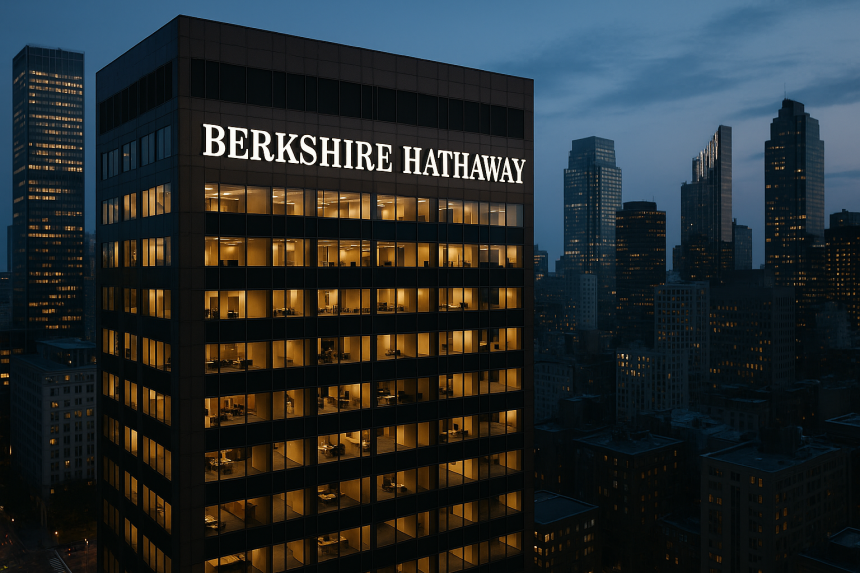
Greg Abel has formally taken the reins at Berkshire Hathaway (NYSE:BRK.A), providing insight into his vision through his inaugural shareholder letter. While acknowledging the distinct and transformative legacy of his predecessor, Warren Buffett, Abel seeks to impart a sense of stability. His message emphasizes cultural continuity and strategic prudence, reflecting a commitment to preserving the company’s legacy while marking the beginning of his leadership. As the company shifts under the new CEO, stakeholders are keenly observing how his direction might shape Berkshire’s future.

 ETH
ETH
 SOL
SOL
 BSC
BSC
 ROBINHOOD
 USDT
USDT
 AAPL
AAPL
Historically, Warren Buffett’s communication style has been distinct, setting a high bar for those who follow. Greg Abel’s decision not to emulate Buffett’s folksy approach highlights his strategic departure. His focus is streamlined and pragmatic, stressing both the importance of maintaining the firm’s foundational ethos and adapting to contemporary business landscapes. This shift might open a new chapter for Berkshire Hathaway, balancing legacy with innovation.
What are the Financial Challenges Ahead?
Berkshire Hathaway has experienced financial turbulence, as demonstrated by a recent decline in earnings. The downturn, particularly evident in its insurance sector, saw net income drop by 25% in the last quarter of 2025. A 30% reduction in operating earnings further underscores the pressures facing Abel as he navigates these challenges. However, his objectives remain clear: maintain the firm’s fiscal discipline and strategically deploy Berkshire’s considerable cash reserves.

How Will Leadership Dynamics Shift?
Abel’s leadership marks a change from Warren Buffett’s predominantly singular approach. Collaborative leadership has been highlighted as a potential new norm, with executives like Ajit Jain, Katie Farmer, and Adam Johnson stepping into more prominent roles. Abel’s strategy indicates an inclusive leadership model aimed at optimizing Berkshire’s operations across varied sectors.
The company’s decentralized structure, a hallmark of its success, remains a pillar under Abel’s guidance. He has underlined the importance of this system, stressing an adherence to long-term planning over quick wins. Abel has expressed a desire to evaluate performance through sustained competitive advantage rather than immediate financial performance.
Abel has communicated transparently with stakeholders, exemplified by his remarks on the underwhelming performance of Kraft Heinz within Berkshire’s portfolio.
“Our investment in Kraft Heinz has been disappointing,”
he stated, aligning himself with Buffett’s earlier critiques and reinforcing his commitment to strategic portfolio management.
Acknowledging the finite nature of his leadership tenure, Abel is realistic about his role.
“I will not be your CEO for the next 60 years,”
Abel noted, indicating an understanding of the limitations and temporal nature of leadership roles while also highlighting the contributions of the broader executive team.
Investors and employees are closely watching Abel’s strategies and decisions, noting both the steadfast adherence to Berkshire Hathaway’s historical values and the potential for evolutionary leadership. As the firm prepares for its annual shareholders meeting, expectations are high for the dialogue and strategic insights that will guide future corporate actions and directions. Stakeholders remain intrigued by how Abel will balance preserving the firm’s rich legacy with necessary adaptations to changing market conditions.