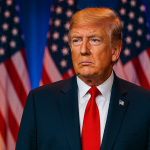
In an unexpected move, financial markets reacted inconsistently following President Trump’s announcement of a tariff increase, affecting international trade dynamics. In Asia, regional indices displayed varied performances as investors weighted potential impacts on global commerce. This decision comes at a time of heightened military tensions between the United States and Iran, while cryptocurrency markets witnessed weakening, driven by growing risk aversion. Meanwhile, European leaders seek clarity on trade policies after a significant court ruling, reflecting the complex interplay between geopolitical and economic factors.

Historically, US tariff policies have repeatedly influenced global markets. With Trump’s new directive to raise tariffs from 10% to 15%, a striking contrast arises compared to previous strategies where gradual incremental increases were observed. Past trends suggest that sudden economic policy shifts lead to immediate yet uneven market responses worldwide. The current move parallels earlier trade measures under the International Emergency Economic Powers Act of 1977, reflecting shifts in diplomatic and economic strategies.
How did Asian markets react to new US tariff decisions?
Asian stock markets responded differently to the tariff increase, with Hong Kong’s Hang Seng Index climbing over 2.3% while South Korea’s Kospi also marked a gain. China’s markets closed with slight fluctuations, reflecting varied investor sentiments and risk assessments. This suggests that the Asian markets are bracing themselves for potential long-term adjustments and impacts on trade relations.

What impact did this have on US-European trade discussions?
European officials expressed concerns shortly after the US Supreme Court ruled that elements of Trump’s previous trade agenda were unconstitutional. Following the court’s decision, European leaders are seeking detailed explanations from Washington on future trade policies, emphasizing the necessity for renewed clarity in bilateral trade agreements. The recent tariff escalation adds another layer of complexity to ongoing transatlantic economic negotiations.
Meanwhile, US-Iran tensions persist, complicating diplomatic negotiations amidst strategic military positioning in various regions. This geopolitical context affects the broader economic landscape as countries recalibrate their foreign policies with attention to trade economics and national security. The ongoing dialogue with Iran signifies efforts to stabilize regional relations which could, in turn, influence global economic stability.
The Trump administration stated, “We aim for constructive engagement with international partners while prioritizing national interests.”
Cryptocurrency markets remained sensitive to evolving trade policies and geopolitical scenarios. Recent trends indicated a decline, attributed to investor uncertainty and a shift towards safer assets in volatile economic conditions. This reflects broader market anxiety amidst rapidly changing international trade and diplomatic landscapes.
A spokesperson for the EU commented, “Clear and stable trade agreements are essential for economic development.”
The comprehensive impact of these developments underscores the necessity for strategic financial and political maneuvers. Economic policies, trade agreements, and diplomatic negotiations continue to shape financial stability and international relations. The intertwined nature of these elements highlights the crucial role of clear communication and adaptive strategies in navigating global market fluctuations.