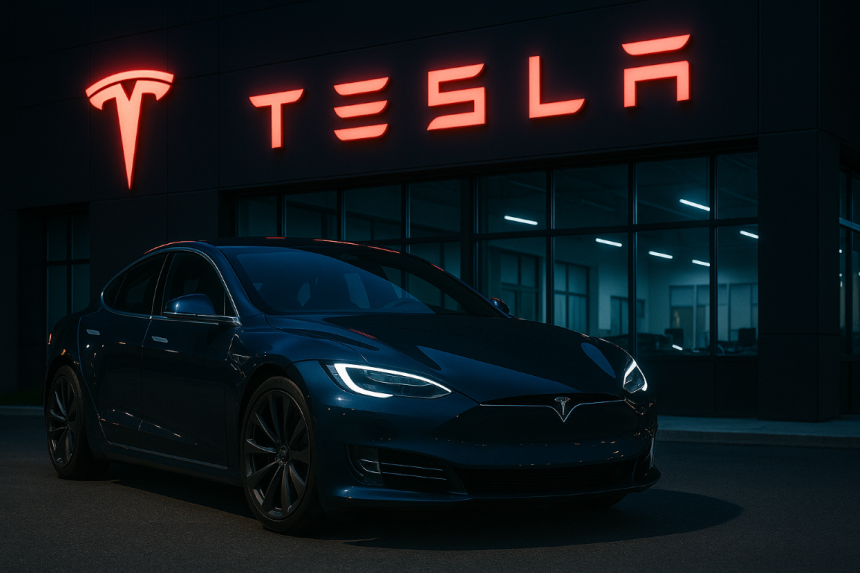

Elon Musk’s considerable financial ascent continues to dominate the narrative as Tesla (NASDAQ:TSLA) sees rapid developments and some challenges. With a net worth currently evaluated at $681 billion, Musk widens his gap on the billionaire leaderboard, substantially outpacing his closest competitor, Google (NASDAQ:GOOGL) co-founder Larry Page, who sits at $249 billion. Meanwhile, Tesla’s stock has recently reached fresh highs, adding further weight to Musk’s immense fortune. The company, however, sees its advancements accompanied by certain regulatory and public perception hurdles.
Musk’s rise and Tesla’s market performance have been a topic of frequent coverage in financial media over recent years, underscored by both praise and criticism. Previous assessments have often lauded the innovative strides brought about by Tesla, while highlighting ongoing legal and operational challenges. Such challenges include past scrutiny over reporting practices and criticisms voiced from investment circles. Musk’s predictive statements about artificial intelligence creating universal income have also stirred diverse opinions, reflecting his polarizing yet influential figure in global technology debates.

What Drives Tesla’s Stock Surge?
Tesla shares have risen, driven by the company’s report of testing robotaxis devoid of safety monitors in passenger seats. This news marked a significant milestone for Tesla in its autonomous vehicle roadmap. Supplementing this were regulatory changes in California, where a planned sales suspension related to Tesla’s Full Self-Driving (FSD) and Autopilot branding was paused. This provided Tesla a window to address lingering concerns about what fully “autonomous” implies and its promotional approach around FSD features.
Why is California DMV Analyzing Tesla’s Terms?
California’s Department of Motor Vehicles has been scrutinizing Tesla’s advertising methods for its FSD capabilities, specifying ambiguity in terms such as “Autopilot.” The state had enforced a sales suspension, questioning if these terms could mislead consumers. “The real focus is on the safety and practicality of these systems,” remarked DMV’s Steve Gordon. As Tesla adapts by integrating descriptors such as “Supervised” to clarify FSD features, regulatory inquiries persist to ensure transparency and consumer safety.
Tesla’s initiative to modify its promotional language has facilitated a pause in regulatory action. By introducing the term “Supervised” in relation to the FSD in passenger vehicles, Tesla aims to navigate through regulatory pressures while ensuring clarity. Without further complications, Tesla is leveraging its current technological advancements to strengthen market presence, even as these requisite adjustments unfold.
Looking at investor sentiments, the path for Tesla is split between optimism over its technological edge and caution regarding regulatory outcomes. A case highlighted by investor Michael Burry underscores certain wariness across financial circles. Musk’s leadership vision is challenged by his continual push against regulatory boundaries, entailing financial implications and potential shifts in investor confidence.
Observing Musk’s expansive wealth against the backdrop of Tesla’s ongoing issues, the dynamics illustrate a broader interplay between rapid innovation and critical oversight. While Tesla’s future holds substantial promise due to its technological endeavors, navigating the regulatory landscape remains imperative. Stakeholders will likely remain vigilant as Tesla molds its strategy to align with operational reality and consumer expectation.
Overall, Musk’s fortunes are propelled by Tesla’s market trajectory and ongoing product iterations, although the path forward could invite increased scrutiny. The collision of high stakes innovation and regulatory engagement is a defining aspect for Tesla’s journey. As Tesla evolves within this complex environment, product transparency and strategic communication will be vital components for continued success and investor trust.