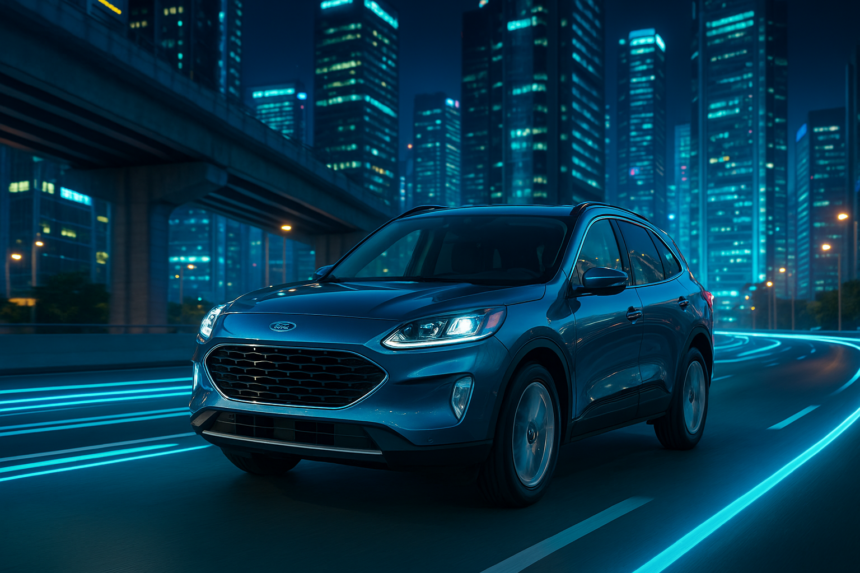

Ford Motor Company is refocusing its attention on the hybrid vehicle sector and affordable electric options, as announced by CEO Jim Farley. Moving away from large-scale EV production, the company intends to cut back on the production of its electric F-150 Lightning. This strategic shift emphasizes the brand’s commitment to aligning with consumer demand and achieving profitability. It highlights that, in an evolving automotive landscape, Ford is prioritizing financial prudence by allocating resources to vehicles with higher margins. Former strategies mainly focused exclusively on large electric models, which didn’t bring the anticipated growth in profitability and consumer interest.
Notably, the demand for hybrid vehicles has risen significantly for Ford, which is an evident shift from their previous strategy emphasizing large, standalone electric vehicles. Historically, the F-150 Lightning was an integral focus of their electric vehicle lineup. However, sales did not meet either the pace or the volume required to justify continued massive investments in these models. Therefore, Ford’s adjustment toward hybrids signifies a change in their evaluation of market trends and consumer preferences.

Why Halt Production of F-150 Lightning?
Ford is concluding the production of the current generation F-150 Lightning by shifting towards an Extended-Range Electric Vehicle architecture. This next generation is expected to offer 700 miles or more on a single charge, a substantial extension from the prior model. This restructuring marks Ford’s intent to compete strategically in the electric vehicles market by enhancing vehicle range and maximizing efficiency. The previous attempts with larger scale EV models struggled financially due to production costs surpassing managed thresholds.
Redefining Investment for the Future?
Investments that were originally designated for larger electric vehicles are now being redirected. The focus will be on hybrid and smaller American-built electric vehicles, along with entering the energy storage sector in the Midwest. This tactical change stems from the continuous rise in hybrid popularity, which has outpaced previous expectations. CEO Jim Farley reinforced,
“We think this is a better play for our company and for our shareholders.”
This insight reflects a tailored response to evolving consumer interests.
By 2030, Ford anticipates that half of its global sales volumes will consist of hybrids, extended-range EVs, and fully electric vehicles, a marked increase from 17% targeted in 2025. The company’s vision for the future entails providing Americans with economical automotive choices that deliver savings, enhance utility, and adapt to a changing energy environment.
Ford’s strategic shift is not merely about scrapping current projects but is instead aimed at positioning the brand as a more pragmatic participant in the electrification roadmap. Farley also noted,
“It’s not just because you can tow or get better gas mileage, it’s because you can also power your house.”
This statement underscores the broad utility that hybrids can offer, aligning with consumer lifestyles moving forward.
Ford’s move to prioritize hybrids presents a calculation to meet economic and consumer expectations. The hybrid sector combines the benefits of traditional combustion engines with electric capabilities, offering a bridge for consumers while larger EV models stabilize in production and demand. This pragmatic shift may anticipate additional evolution within the automotive industry’s delineation between traditional and electric-powered vehicles.